
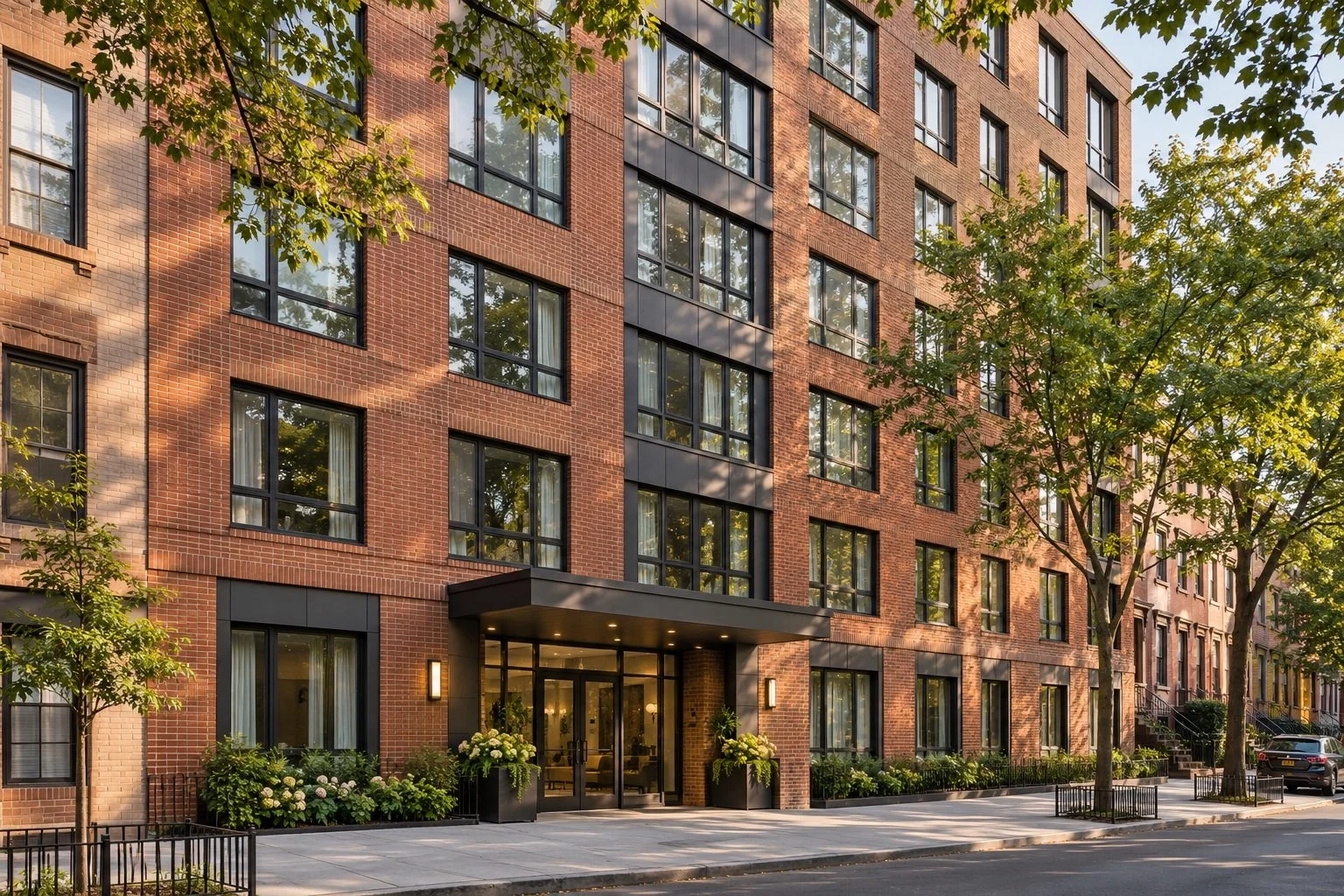
Contemporary Brooklyn-style multifamily apartment building. AI-generated image
An affordable apartment sitting vacant represents two missed opportunities: lost rental income for the property owner and a home that could be occupied by an eligible household. Yet re-renting an income-restricted apartment is not the same as leasing a market-rate unit. The owner must balance occupancy, applicant eligibility, and the specific requirements attached to the property.
For owners and property managers of existing 421-a buildings, especially those with a smaller number of affordable apartments, the challenge is often not simply generating interest. It is maintaining an orderly, compliant process from vacancy notification through move-in when turnover occurs.
Start with the property's requirements
Before advertising a vacant unit, determine which version of the 421-a program applies to the building, the applicable regulatory documents, the approved rent and income restrictions, and the party responsible for marketing and compliance. Not every 421-a development follows the same procedures.
The owner should also determine whether an existing applicant pool or waitlist can be used, whether it remains usable under the applicable rules, and whether additional outreach is needed. This is an important distinction when a development's original lottery has already ended.
Understand the current re-rental process
HPD and HDC extended their temporary re-rental and resale waiver in May 2026, with an anticipated end date of April 30, 2027. For covered developments, the waiver allows remarketing outside Housing Connect under specified conditions. HPD and HDC have distinct advertising processes, and applicant selection, documentation and agency submission requirements remain in effect. Importantly, Chapter 51 (421-a) projects covered by the waiver still require agency approval before move-in.[1]
In other words, a different marketing channel does not mean a less regulated leasing process.
Identify where vacancies are getting stuck
Property managers can benefit from reviewing the operational pipeline rather than treating every vacancy as an advertising problem. Consider six questions:
Is the unit ready for occupancy, and is there a reliable ready date?
Have the rent, income thresholds, occupancy standards, and applicable restrictions been confirmed?
Is the current applicant pool sufficient, and is communication being handled consistently?
Are eligibility files complete, accurate, and ready for the required review?
For applicants using rental assistance vouchers, such as CityFHEPS or Section 8, is someone coordinating the required documentation, inspections where applicable, agency follow-up and outstanding approvals to prevent avoidable leasing delays?
Is someone accountable for the outstanding steps between approval and lease execution?
The answers help distinguish a marketing issue from a documentation, unit-readiness, voucher coordination, or staffing issue. Each requires a different response.
Calculate the cost of delay
Consider a hypothetical building with six vacant affordable apartments renting for $1,800 each. One additional month of vacancy represents $10,800 in gross scheduled rent not collected, before expenses or concessions. For a single apartment, the same delay represents $1,800.
This simple calculation gives an owner a useful framework for evaluating the cost of additional leasing support. The objective is not to rush eligibility decisions, but to remove avoidable delays while maintaining the integrity of the process.
When should a property manager consider outside support?
An in-house team may have the knowledge required to handle re-rentals but lack capacity during periods of increased turnover. In that situation, outside support can be scoped around the actual bottleneck: compliant remarketing, applicant follow-up, documentation, file review, voucher coordination, or move-in logistics.
The scope should clearly identify the responsible marketing agent, who performs each review, who communicates with the agency, who authorizes decisions, how applicant information is protected, and what constitutes completion. Any required agency approvals should be confirmed before work begins. The goal is to complement existing management operations and preserve accountability.
A practical next step
If your property has existing affordable vacancies, start by assembling a current vacancy list, applicable program and unit information, existing waitlist status, and a summary of unresolved leasing steps. This gives management a practical basis for deciding whether internal resources are sufficient or additional support is warranted.
About Real Estate NY, LLC (ARENY) is a Brooklyn-based NYC-certified M/WBE and HPD-prequalified marketing agent offering principal-led affordable housing re-rental and occupancy support to property owners and management companies. We welcome conversations about existing vacancies and clearly defined overflow assignments.
Contact:
Beth Frazier, Founder & Principal
beth@aboutrealestateny.com
718-690-1365
www.aboutrealestateny.com
Sources and references
Information reviewed November 19, 2026. Project-specific rules and current agency guidance should be confirmed. This article provides general operational information and does not constitute legal advice.